Dental Crowns Dracut
Defending Weak Teeth from Harm

A person’s smile wears down over time, regardless of their oral habits. It follows that you might develop cavities, chipped or cracked teeth, or other dental damage as you live life. Thankfully, dental crowns in Dracut are always an option if or when such harm occurs. These special caps protect a patient’s weaker teeth, keeping them strong, sturdy, and stable. Please keep reading to learn more about them, or book a consultation to hear the details in person.
Why Choose New England Smiles for Dental Crowns?
- Top-Tier & Lifelike Crown Materials
- Highly Experienced Dental Team
- In-House Savings Plan Available
What is a Dental Crown?
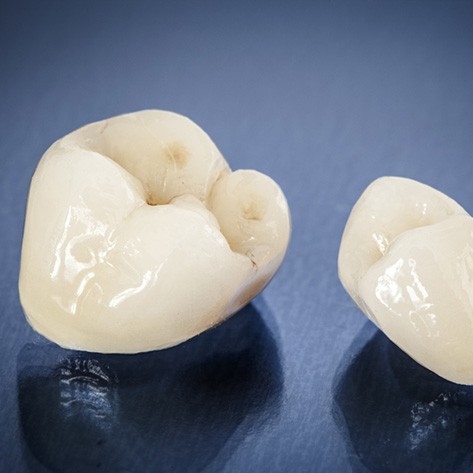
In essence, a dental crown is a small, durable cap fitted onto a damaged tooth. Its role is to prevent further harm to the treatment site once placed, thus reducing the risk of oral issues. Here at our office, the cap is usually made from zirconia – a metal-free ceramic resistant to chips and fractures.
Given the facts above, the best dental crown candidates have one (or more) of the following traits:
- Large & Failing Dental Fillings
- Highly Fractured or Decayed Teeth
- A Root-Canal-Treated Tooth
- Bite Problems That Need Correction
- An Existing-yet-Damaged Dental Crown
The Dental Crown Process
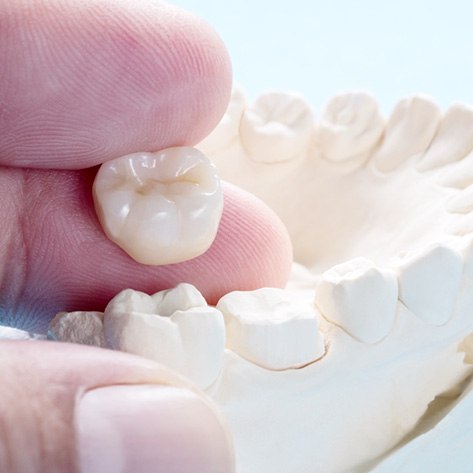
Our dental crown process usually spans two dental visits. While the first session prepares the tooth for its restoration, the second appointment places the actual cap.
Dr. Patel herself takes several steps for the “prep visit.” First of all, she’ll numb your mouth with an anesthetic to ensure the preparation is painless. She will then remove any old fillings from the treatment site, rebuilding any missing structures as necessary. The next step will be the shaving of your enamel – a step that makes room for your tooth’s crown. Once this removal work is over, Dr. Patel will take an impression of your tooth; this mold will allow workers to craft your restoration.
Two to three weeks after the “prep visit,” you’ll attend the placement appointment. Our team will place your dental crown at that time, all while ensuring it fits your tooth well. (You can also expect the placement to be quick; we’ll just confirm the restoration is comfortable, blends well, etc.) We’ll then conclude the visit by cementing and polishing the crown, after which you can enjoy your strengthened tooth.
The Benefits of Getting a Dental Crown

Following a crown treatment, you can expect the benefits below:
- Versatile Effects – Because dental crowns completely encompass teeth, they can treat chips, cracks, cavities, and more.
- A Sturdier Smile Due to the use of durable materials, dental crowns both protect your teeth and withstand your bite. They can thus help you avoid root canals or tooth extractions later.
- Greater Beauty – A tooth-colored dental crown matches your enamel, blending seamlessly with the rest of your smile. Your treatment results will thus look incredibly lifelike.
- Enduring Results – An average dental crown lasts 5-15 years, while a well-maintained one can work for 30 years or more.
Dental Crowns FAQs
Are dental crowns permanent?
Dental crowns are not considered permanent restorations, but they can last 5 to 15 years, depending on how well you care for them. When teeth are damaged or weakened and need additional support to extend their lifespan, dental crowns can be the answer. However, you must commit to our team's recommendations if you want your new tooth to last as long as possible. Good oral healthcare, daily dental habits, a healthy diet, and giving up bad habits are necessary.
Eventually, wear and tear will require you to replace your dental crown, but the steps you take can minimize how often you need to do so.
Are dental crowns covered by insurance?
If you need a dental crown because it is medically necessary to address a decayed or damaged tooth, your dental insurance will likely pay a portion of the total cost. It’s a restorative treatment, and in these cases, most companies will agree to pay 50% once you meet your annual deductible. This lowers your out-of-pocket responsibility, making it easier for you to budget. Every plan is different, so if you have questions about how much coverage you can expect from your dental insurance, ask our office. We are here to review your plan’s details and discuss ways to maximize your savings.
Does getting a dental crown hurt?
Your comfort is our priority. At New England Smiles, our dentist in Dracut, Dr. Patel, uses local anesthesia to numb the area of your mouth requiring treatment. This helps you avoid pain throughout your visit. Instead, you’ll stay comfortable in the dentist’s chair while Dr. Patel cleans and prepares your tooth for its new custom restoration. After treatment, we will make sure you feel okay before allowing you to return to work or home.
You may feel some slight sensitivity and soreness after the anesthesia wears off, but it’s only temporary and can be managed with an over-the-counter pain reliever.
What happens if you wait too long to get a dental crown?
Putting off treatment for a decayed or damaged tooth is never a good idea. Forgoing a dental crown will only worsen your symptoms and increase your chances of root canal treatment or tooth extraction. The longer you delay, the more cracks can deepen, decay can spread, and your teeth may sustain additional damage. Instead, you can protect your smile and oral health by choosing a dental crown to preserve your tooth and give it a better chance at a longer-lasting future.