Dentures Dracut
The Traditional Treatment for Tooth Loss
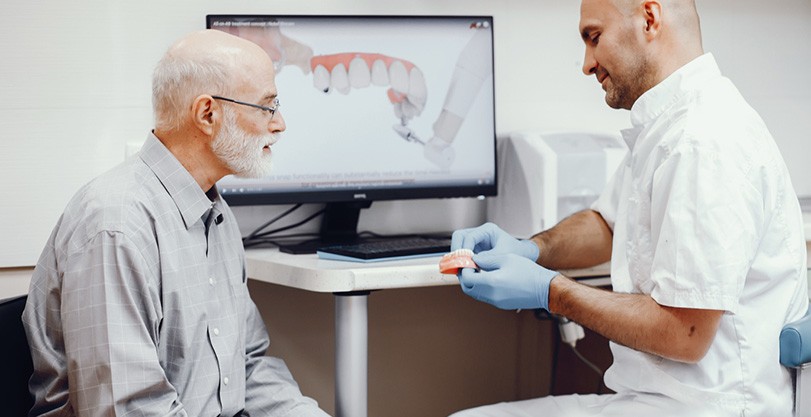
People have dealt with tooth loss for ages, and the problem persists today. Even now, about 178 million American adults are missing at least one tooth. The good news is that we have an equally enduring solution for one’s missing teeth: dentures in Dracut! These traditional prosthetics work quite well, continuing to restore and beautify patients’ smiles. Please keep reading to learn more about them, or book a consultation to see us in person.
Why Choose New England Smiles for Dentures?
- Dentist with Years of Experience
- High-Quality, Lifelike Materials
- Warm & Friendly Dental Team
Who’s a Good Candidate for Dentures?
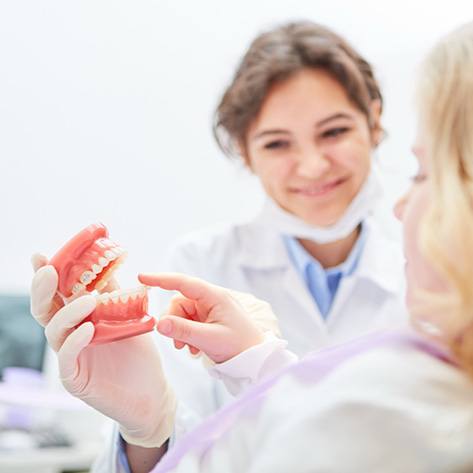
An adult with missing teeth can almost always qualify for dentures. Plus, the degree of tooth loss doesn’t affect your candidacy; even patients without any teeth can get the prosthetics. You’ll still need to consult Dr. Patel before you commit to anything, though. She’ll confirm whether you’re a good treatment candidate, as well as suggest any preliminary care you need. For further details, please keep reading or call us.
Effects of Missing Teeth
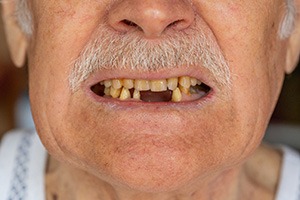
To clarify your candidacy, consider the nature of tooth loss. Reflecting on its causes and effects offers context on how dentures may help you.
Missing teeth can stem from various factors. For instance, a tooth might fall out because of a cavity or a pulp-related infection. Some teeth could also be lost because of gum disease, which weakens the tissues supporting your smile. Patients can also have teeth knocked out by injuries, accidents, and blunt force in general.
In contrast, tooth loss’ effects are narrow but consistent. Being without teeth almost always makes it hard to eat, speak, or smile very well. The condition also makes teeth tilt, erodes the jaw, and causes bacterial buildup.
What Qualifies You for Dentures?

It generally isn’t difficult to qualify for dentures, as nearly any adult with missing teeth can be a good candidate. That said, would-be patients should keep three key candidacy facts in mind.
The first is that you need a (relatively) healthy smile to use dentures. If you have weak gum and jawbone tissues, the restorations will slip around your mouth. These parts of your smile must be strong to keep a denture stable; treatment won’t work otherwise.
Next, which type of denture you get depends on how many teeth you lost. Patients missing a few will merely need a partial model. On the other hand, someone who’s lost all their teeth will probably require a full denture.
Also note that finances impact treatment. After all, dentures are less expensive than other tooth replacements but still prove effective. That means patients who want cost-effective care are well-suited for them.
Alternative Tooth-Replacement Options
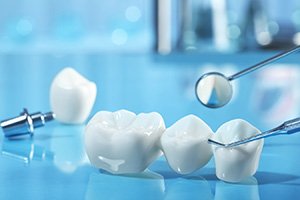
If you don’t (initially) qualify for dentures, don’t panic. Getting a few preliminary procedures isn’t your only option. Instead, you can opt for one of our practice’s other restorations:
- Dental Bridges – Made of dental crowns fused to a pontic, a dental bridge is a fixed restoration that replaces one to four adjacent teeth. A dentist must thus alter nearby teeth to place it.
- Dental Implants – Dental implants don’t sit on the gums like dentures or dental bridges do. Instead, these small titanium posts are set in the jaw’s empty sockets. They then fuse with your jaw over time to become highly secure prosthetic teeth.
Types of Dentures
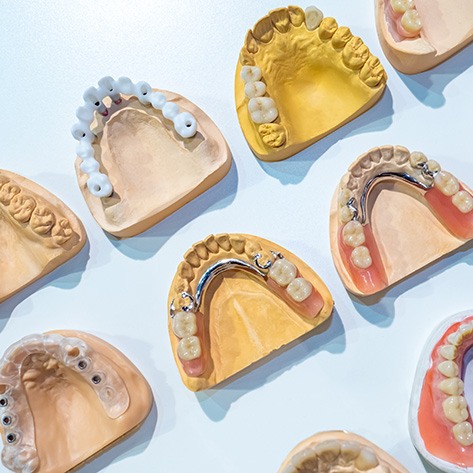
New England Smiles offers several kinds of dentures, and each one has distinctive traits. We’ll suggest one of the following types to you (if any) after your oral exam:
Partial Dentures
In line with their name, partial dentures only replace a few teeth. They “work” by fitting snugly over one’s gums or by clasping onto “abutments” – nearby natural teeth. When they’ve been securely fastened, they use their pink acrylic bases and color-matched teeth to blend with your smile.
Full Dentures
Full dentures do more than partial kinds, restoring an entire arch of teeth at once. They thus rely only on suction force for security; they don’t depend on abutments. A full denture is similar to a partial one, though, in that it fits snugly over the gums.
Implant Dentures
Implant dentures are those that secure themselves with dental implants, which are small metal posts placed in one’s jaw. Their design makes them a “permanent” solution to tooth loss that appeals to many patients. Since implant posts don’t slip or fall, an implant denture remains secure at all times. The latter device also prevents (and even reverses) cases of facial collapse.
The Benefits of Dentures

With dentures from our office, you’ll enjoy the following benefits:
- Enhanced Beauty – Modern dentures look incredibly lifelike and natural, as they use high-quality materials. Onlookers seldom notice they aren’t “real” teeth.
- Better Nutritional Health – Because they provide sturdy replacement teeth, dentures help you chew and eat a wider range of food. They thus offer an indirect boost to nutritional health.
- More Confidence – Dentures boost confidence as they restore the patient’s smile. Indeed, using them leads to a more self-assured mood.
- Affordable Care – Even as dentures work amazingly well, they usually have lower prices than dental bridges or dental implants. Patients with smaller budgets will find them suitable.